


Department of Acute and Critical Care Medicine, Graduate School of Medicine, Hokkaido University
WADA Takeshi M.D., Ph.D.Surgery
- [Academic & Professional Experience]
-
- 2005 M.D. Hokkaido University School of Medicine
- 2005 Resident, Asahikawa Red Cross Hospital
- 2006 Resident, Clinical Training Center, Hokkaido University Hospital
- 2007 Emergency Physician, Department of Emergency and Critical Care Medicine, Center for Advanced and Acute Medicine, Hokkaido University Hospital
- 2010 Assistant Professor, Advanced Center for Critical Care Medicine, Nippon Medical School Hospital
- 2012 Assistant Professor, Department of Neurosurgery, Nippon Medical School Hospital
- 2013 Assistant Professor, Department of Emergency and Critical Care Medicine, Center for Advanced and Acute Medicine, Hokkaido University Hospital
- 2016 Research fellow, Pathology & Laboratory Medicine, School of Medicine, Boston University
- 2016 Research Fellow, Harvard Medical School / Brigham and Women’s Hospital
- 2018 Assistant Professor, Department of Emergency and Critical Care Medicine, Center for Advanced and Acute Medicine, Hokkaido University Hospital
- 2019 Assistant Professor, Emergency and Critical Care Center, Hokkaido University Hospital
- 2020 Assistant Professor, Division of Acute and Critical Care Medicine, Department of Anesthesiology and Critical Care Medicine, Hokkaido University Faculty of Medicine
- 2024 Professor, Division of Acute and Critical Care Medicine, Department of Anesthesiology and Critical Care Medicine, Hokkaido University Faculty of Medicine
Advancing with groundbreaking research in both clinical and basic medicine while supporting the frontline of emergency care
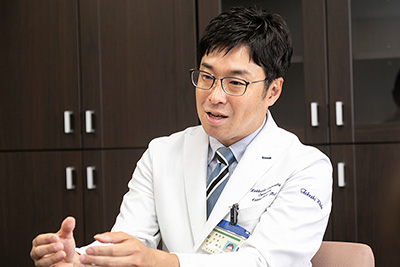
As a tertiary emergency medical institution, Hokkaido University Hospital provides care for critically ill emergency patients, particularly those with highly urgent and specialized conditions such as stroke and acute myocardial infarction. At the forefront of this effort is the Emergency and Critical Care Center, where approximately 1,000 to 1,200 emergency patients are treated annually. The center is headed by Professor Takeshi Wada of the Division of Acute and Critical Care Medicine, Department of Anesthesiology and Critical Care Medicine, Faculty of Medicine. The Center also accepts highly specialized cases—including patients with extensive burns and those with severe multiple trauma—that cannot be handled at other hospitals. As the “stronghold” of Sapporo and Hokkaido, it provides efficient, high-quality emergency medical care around the clock, throughout the year, without any interruption.
Professor Wada says, “Emergency medicine is unique since the object of specialty is not limited to a single organ system. We also often not only provide the initial treatment of emergency patients, but also their subsequent intensive care, thus striving to be available to ‘provide advanced medical care anytime, anywhere, to anyone.’ We also serve an important social role through such medical services as doctor helicopters, doctor cars, disaster medicine, and infectious disease response.” The department is also simultaneously re-enforcing collaboration with other clinical departments, and has recently expanded its acute surgical treatment system in cooperation with the Department of Orthopedic Surgery.
“This is the first step toward centralized trauma care. In the future, we hope to build a system at Hokkaido University Hospital that can provide comprehensive treatment not only for trauma but also endogenous diseases requiring surgery during the acute phase. As a tertiary emergency medical institution, Hokkaido University Hospital has an advanced and specialized medical system with both the technical expertise and manpower to fully support such care,” says Professor Wada.
As far as research is concerned, Professor Wada focuses on blood coagulation disorders, particularly disseminated intravascular coagulation (DIC). DIC is a seemingly paradoxical condition in which numerous small blood clots form throughout the body while coagulation factors are consumed, leading to bleeding in other areas. Traditionally, anticoagulant therapy has not been used for trauma-induced DIC due to the associated risk of bleeding. However, Professor Wada has proposed an innovative hypothesis whereby anticoagulant therapy might actually be effective for trauma patients, and he is now conducting clinical studies to explore the potential benefits of such clinical intervention.
“For example, anticoagulant therapy is considered effective for DIC associated with sepsis. I thought that if suppression of excessive coagulation responses could help to stop bleeding, this approach may also be applicable to DIC in trauma patients. It is quite a challenging idea, but the concept has been gaining support recently. If it is successful, it could significantly change our understanding of the pathophysiology of trauma-induced coagulopathy,” says Professor Wada.
The department is also conducting research on immune responses following severe trauma, with a particular focus on elucidating the mechanisms behind the unique immune reactions observed after head injuries. Professor Wada explains, “After trauma, many patients experience a decline in immune function, making them more susceptible to infections. Interestingly, however, we have observed that the immune response is actually enhanced after head trauma. We are now investigating this difference, as a proper understanding of this phenomenon may lead to the development of new treatments for infectious diseases.” The research group in the Department of Acute and Critical Care Medicine is closely analyzing the functional changes in immune cells—particularly neutrophils—following traumatic and other physical insults.
Research on invasive immunology conducted in a pleasant and friendly atmosphere
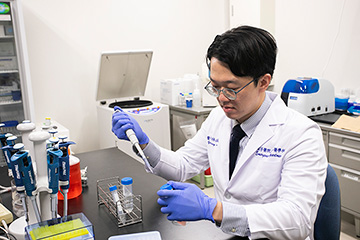
Dr. You-Cheng Lin, a visiting researcher, is an emergency physician at Wanfang Hospital in Taiwan. Since April 2025, he has been conducting research at the Department of Acute and Critical Care Medicine. Building on the invasive immunology foundation established at Professor Wada’s laboratory, he is currently studying immune responses related to temperature management in the pathophysiology of sepsis. Dr. Lin shared his impressions of the laboratory and research environment: “At first, I was a little confused by the language barrier and the different new environment, but everyone here is so friendly that I quickly felt at home. I was already familiar with Japanese food culture, so I’ve been able to continue my research smoothly without any difficulties.”
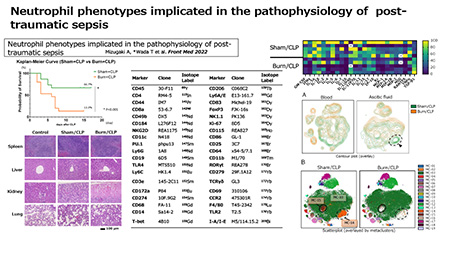
Specially Appointed Assistant Professor Asumi Mizugaki is engaged in research on neutrophil phenotypes involved in the pathophysiology of post-traumatic sepsis. Neutrophils play a central role in innate immunity, and their function to eliminate pathogens at the frontline of infection is widely known. However, recent studies have suggested the existence of diverse neutrophil phenotypes, including not only pro-inflammatory but also anti-inflammatory subsets, indicating that these different phenotypes may be involved in various disease conditions. In this study, a post-traumatic sepsis mouse model is used to investigate survival rates, bacterial counts in ascitic fluid, histopathological findings, and immunological characteristics analyzed with advanced immunology-related equipment. The research is intended to elucidate the involvement of neutrophil phenotypes in the pathophysiology of post-traumatic sepsis, and to identify factors associated with prognosis. Studies focusing on neutrophils after trauma are still limited, and this topic is considered an important research area to understand immune responses following trauma.
“I entered graduate school after working as a clinician for ten years. I may have started my research career later than others, but I’ve been greatly inspired and have learned a lot from Professor Wada and other faculty members engaged in basic research. Gaining different experiences and perspectives from those in the clinical field has been an invaluable source of growth for me,” says Ms. Mizugaki.
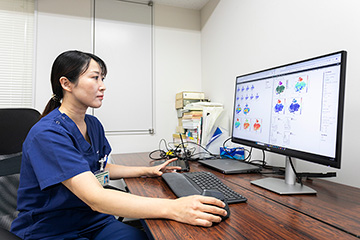
(Interviewed in August 2025)
Relaxation by enjoying leisure activities and sports
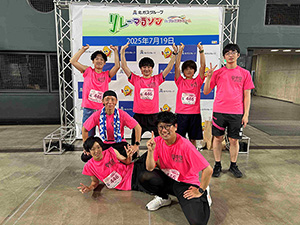
Regarding the atmosphere at the department, we place great importance on cooperation and strive to create a psychologically safe environment where young doctors feel comfortable expressing their opinions. The department actively supports the career development of young physicians, encouraging them to study abroad or pursue their areas of specialization. We also hold many leisure events, such as visits to beer gardens and hot spring trips, as well as various sports activities like marathons and bowling tournaments. Many members train during their breaks or days off, and it’s even said that “there’s no one with metabolic syndrome in this department.” The department maintains a pleasant and friendly atmosphere, providing doctors working on the front line of emergency medicine with opportunities to relax and unwind from the tension of their demanding work.